PCE vs Naphthalene Superplasticizer: Which Water Reducer Should You Choose?
Polycarboxylate ether (PCE) and sulfonated naphthalene formaldehyde (SNF), also called naphthalene superplasticizer or PNS, are two widely used high-range water-reducing technologies for concrete.
Both can improve concrete flowability while reducing the amount of mixing water required.
However, their molecular structures, dosage requirements, slump-retention behavior, formulation flexibility and cost structures are different.
So which one should a concrete producer choose?
The practical answer is:
PCE is generally preferred when high water reduction, low water-to-binder ratio, extended workability or high-performance concrete is required. SNF remains a practical option for many conventional and cost-sensitive concrete Applications where extremely high water reduction or long slump retention is not required.
The correct choice should be based on the total concrete performance and cost per cubic meter rather than admixture price per ton alone.
What Is PCE Superplasticizer?
Polycarboxylate ether superplasticizer is a comb-shaped polymer.
Its molecular structure normally contains:
· an adsorption-active backbone; and
· long hydrophilic polyether side chains.
Once the polymer adsorbs on cement particles, the side chains extend into the aqueous phase and create steric hindrance.
This makes it difficult for dispersed cement particles to come back together.
The result is efficient cement dispersion and the release of water previously trapped inside cement agglomerates.
Because PCE structure can be deliberately modified, manufacturers can design different grades for:
· high water reduction;
· slump retention;
· precast concrete;
· self-compacting concrete;
· low-viscosity concrete;
· specific cement compatibility.
What Is Naphthalene Superplasticizer?
Naphthalene superplasticizer is commonly based on sulfonated naphthalene formaldehyde condensate.
It is also referred to as:
· SNF;
· NSF;
· PNS;
· naphthalene-based superplasticizer.
SNF works mainly through electrostatic repulsion.
After adsorption onto cement particles, negatively charged sulfonate groups increase repulsive forces between particles.
This breaks down cement agglomerates and improves flowability.
SNF has been used for decades and remains an established water-reducing technology in many markets.
PCE vs SNF: Quick Comparison
|
Performance Factor |
PCE Superplasticizer |
Naphthalene/SNF Superplasticizer |
|
Main dispersion mechanism |
Steric hindrance + electrostatic effects |
Mainly electrostatic repulsion |
|
Typical water reduction |
Generally higher |
Moderate to high |
|
Required dosage |
Generally lower on active basis |
Generally higher |
|
Slump retention |
Can be specifically designed for long retention |
Generally shorter without formulation support |
|
Molecular design flexibility |
Very high |
More limited |
|
High-performance concrete |
Excellent suitability |
Possible, but less efficient in demanding systems |
|
SCC/UHPC |
Commonly preferred |
Less commonly selected |
|
Cement sensitivity |
Can be sensitive to sulfate, clay and cement chemistry |
Different compatibility profile |
|
Raw-material cost per ton |
Usually higher |
Usually lower |
|
Cost comparison |
Evaluate cost per m³ and performance |
Evaluate cost per m³ and performance |
Actual performance ranges vary by product, cement, dosage and concrete mix design.


Difference No. 1: Dispersion Mechanism

The biggest technical difference between PCE and SNF begins at the molecular level.
SNF: Electrostatic Repulsion
SNF adsorbs onto cement particles and increases negative surface charge.
Particles with similar charge repel each other, breaking down flocculated cement structures.
This mechanism can provide strong initial dispersion.
PCE: Steric Stabilization
PCE also adsorbs onto cement surfaces, but its long polyether side chains create an additional physical barrier between neighboring cement particles.
This steric effect helps prevent particles from reflocculating.
The combination of adsorption and steric stabilization allows modern PCE systems to achieve strong dispersion at relatively low dosage.
Difference No. 2: Water-Reduction Capability
PCE products are generally capable of achieving higher water reduction than conventional SNF products when properly matched to the concrete system.
This is important because reducing mixing water while maintaining workability can lower the water-to-binder ratio.
A lower water-to-binder ratio can support:
· higher compressive strength;
· lower permeability;
· denser cementitious microstructure;
· improved durability potential.
However, water-reduction percentage should never be treated as a fixed property independent of the concrete.
Results depend on:
· cement;
· aggregate;
· supplementary cementitious materials;
· target slump;
· dosage;
· mixing procedure;
· test method.
For procurement decisions, compare both admixtures in the same concrete mix.
Difference No. 3: Slump Retention
Slump retention is one of the main reasons many ready-mix producers use PCE systems.
PCE molecular architecture can be adjusted to balance:
· initial dispersion; and
· workability retention.
This is particularly useful for:
· long-distance transportation;
· hot-weather concrete;
· pumped concrete;
· large continuous pours.
SNF can also be formulated for workable concrete, but conventional SNF systems generally provide less molecular flexibility for extended slump-retention design.
Where longer working time is required, SNF formulations may require additional set-control or retention components.
Difference No. 4: Dosage Efficiency

PCE is normally used at a lower active dosage than traditional naphthalene superplasticizers.
This means purchasing cost should not be evaluated from price per ton alone.
Consider this example:
Product A may cost more per ton but require substantially less active material per cubic meter.
Product B may cost less per ton but need a higher dosage.
The correct economic comparison is:
Admixture cost per cubic meter of concrete + resulting concrete performance + processing cost.
Other economic factors may include:
· cement saving potential;
· rejected concrete;
· re-dosing;
· pumping efficiency;
· production cycle time;
· customer complaints.
Difference No. 5: Cement and Aggregate Compatibility
Neither PCE nor SNF performs identically with every cement.
PCE can be particularly sensitive to:
· sulfate availability;
· C3A;
· cement fineness;
· supplementary cementitious materials;
· clay-containing aggregates.
Certain clay minerals can interact strongly with conventional PCE molecules and increase admixture demand.
SNF has a different adsorption mechanism and therefore shows a different compatibility profile.
This does not mean SNF is universally more compatible.
The correct conclusion is that the two technologies respond differently to raw-material chemistry.
Compatibility testing is necessary for both.
Difference No. 6: High-Performance Concrete
PCE has become especially important in high-performance concrete because high dispersion efficiency allows concrete designers to work at lower water-to-binder ratios.
Typical application areas include:
· high-strength concrete;
· self-compacting concrete;
· high-rise pumping;
· precast concrete;
· bridge construction;
· tunnel segments;
· high-performance infrastructure;
· UHPC-related formulations.
SNF remains effective in many:
· conventional ready-mix formulations;
· precast products;
· general infrastructure applications;
· mortar formulations;
· cost-sensitive projects.
The required performance level should determine the technology.
Difference No. 7: Formulation Flexibility
One of the strongest advantages of PCE chemistry is molecular design flexibility.
PCE manufacturers can change:
· backbone composition;
· side-chain length;
· side-chain density;
· molecular weight;
· functional groups;
· comonomers.
This enables product families targeting different performance requirements.
For example, a supplier may offer:
· high-water-reducing PCE;
· slump-retention PCE;
· early-strength PCE;
· powder PCE;
· specialized compatibility grades.
SNF chemistry is more mature and standardized but provides less freedom for this type of molecular tailoring.
Is SNF Obsolete?
No.
The fact that PCE is a newer and more flexible technology does not mean that SNF no longer has value.
SNF can remain commercially attractive where:
· the concrete specification does not require extreme water reduction;
· transportation time is short;
· the existing concrete formulation is stable;
· local customers are familiar with SNF;
· raw-material economics favor naphthalene-based systems;
· the plant already has established dosing and QC procedures.
A technology should not be replaced simply because another one is newer.
The question is whether changing it creates measurable technical or economic value.
When Should You Choose PCE?
PCE is generally the stronger candidate when the project requires:
High Water Reduction
Useful when low water-to-binder ratio is required.
Long Workability
Important for ready-mix transportation and complex placement.
Self-Compacting Concrete
SCC requires high flowability while maintaining stability.
High-Strength Concrete
Efficient dispersion can support lower water demand.
High-Rise Pumping
Controlling flowability and rheology becomes increasingly important.
Customized Admixture Performance
PCE molecular design provides greater formulation flexibility.
When Can SNF Still Be a Good Choice?
Consider SNF when:
· the required water reduction is moderate;
· price sensitivity is high;
· transportation distance is limited;
· existing mix designs already perform reliably;
· customers use conventional concrete specifications;
· switching to PCE would require unnecessary formulation changes.
For many projects, reliable conventional performance is more valuable than paying for performance that the project does not need.
What About Sodium Sulfate Content in SNF?
Commercial naphthalene superplasticizers are often supplied in different grades partly distinguished by sodium sulfate content.
This parameter matters because it influences the composition and effective active content of the product.
When comparing SNF suppliers, buyers should review:
· solids;
· sodium sulfate;
· chloride;
· pH;
· moisture;
· flow performance;
· batch consistency.
Avoid buying only according to color or price.
The Certificate of Analysis should correspond to the actual shipment batch.
Powder or Liquid: Which Is Better for Export?
Both PCE and SNF can be supplied in forms suitable for industrial distribution.
The optimal choice depends on logistics and customer processing.
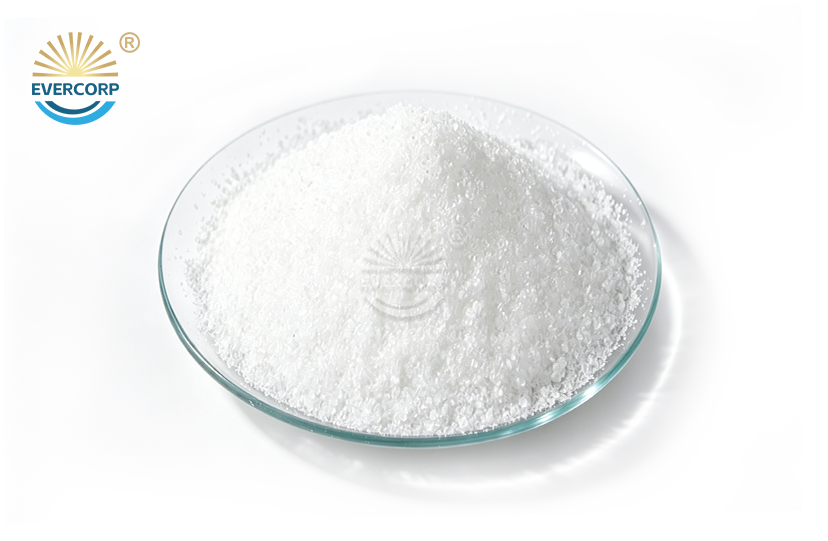
Powders can offer:
· high active content;
· lower transported water;
· easier long-distance export;
· suitability for dry-mix applications.
Liquids can offer:
· easier automatic dosing;
· no dissolution stage;
· convenient ready-mix production.
Buyers should calculate total landed cost rather than only FOB price.
How to Compare PCE and SNF in the Laboratory

Before switching technologies, conduct a controlled test.
Keep the Concrete Mix Constant
Use the same:
· cement;
· aggregate;
· supplementary materials;
· water-to-binder target;
· temperature.
Optimize Each Admixture Individually
Do not automatically compare PCE and SNF at the same percentage dosage.
The two technologies have different effective dosage ranges.
Measure
· initial slump;
· slump retention;
· water reduction;
· air content;
· bleeding;
· segregation;
· setting time;
· 1-day strength where relevant;
· 7-day strength;
· 28-day strength.
Compare Economic Performance
Calculate:
· admixture cost per cubic meter;
· cement consumption;
· production efficiency;
· reject rate;
· transport requirements.
The cheapest product per ton is not necessarily the lowest-cost concrete solution.
PCE vs SNF Selection Guide
|
Application |
Recommended Starting Point |
|
General cost-sensitive concrete |
Evaluate SNF and PCE economically |
|
High-strength concrete |
PCE |
|
Self-compacting concrete |
PCE |
|
Long-distance ready-mix |
PCE/slump-retention system |
|
High-rise pumped concrete |
PCE |
|
Conventional precast |
Test both depending on cycle requirements |
|
Existing stable SNF formulation |
No need to change without technical/economic benefit |
|
Very low w/b concrete |
PCE |
|
Market requiring low unit raw-material cost |
SNF may remain competitive |
This table is a starting point only. Final selection should always be confirmed through trial mixes.
What Should Buyers Ask a Superplasticizer Supplier?
For either PCE or SNF, request:
· current TDS;
· SDS;
· batch-specific COA;
· recommended dosage range;
· product form and solids;
· packaging;
· storage conditions;
· representative samples;
· quality documentation.
For PCE, also ask what the grade is designed for:
· water reduction;
· slump retention;
· precast;
· powder applications;
· other specialized performance.
For SNF, review the grade and sodium sulfate specification carefully.
FAQ
Is PCE better than naphthalene superplasticizer?
PCE generally provides higher dispersion efficiency and greater formulation flexibility, but SNF can remain economical and effective in conventional concrete. The correct choice depends on the project.
Which one has better slump retention?
Purpose-designed PCE systems normally provide more flexibility for long slump retention.
Which is cheaper?
SNF normally has a lower price per ton, but PCE is usually used at a lower active dosage. Compare cost per cubic meter rather than price per ton.
Can SNF be used for high-strength concrete?
Yes, depending on the mix design and performance target. PCE is generally more efficient when very low water-to-binder ratios or very high flowability are required.
Can PCE and SNF be used together?
Complex admixture combinations should only be used after compatibility testing. Do not assume that combining two dispersants will automatically improve performance.
Which product is better for export markets?
Both can be suitable. Product selection should reflect the target market’s concrete technology, cement characteristics, price sensitivity and logistics.
Source PCE and Naphthalene Superplasticizer From EverStar Group
EverStar Group supplies both PCE polycarboxylate superplasticizers and naphthalene-based superplasticizers for concrete admixture manufacturers, distributors and construction-material producers.
Our product portfolio allows customers to evaluate the appropriate water-reducing technology according to:
· required water reduction;
· slump retention;
· concrete grade;
· local cement;
· project conditions;
· target cost.
Customers can request:
· TDS;
· SDS;
· batch-specific COA;
· product samples;
· commercial quotation;
· export documentation.
For new formulations, we recommend testing the product with your actual cement, aggregates and project conditions before bulk purchasing.
Contact EverStar Group for current specifications and sample availability.
Email: info@cneverstar.com
When deciding whether PCE is the right dispersant technology for a project, see our PCE vs naphthalene superplasticizer comparison.
References
1. Plank, J., Sakai, E., Miao, C.W., Yu, C. & Hong, J.X. Chemical Admixtures—Chemistry, Applications and Their Impact on Concrete Microstructure and Durability. Cement and Concrete Research, 2015.
2. Synthesis and Modification of Polycarboxylate Superplasticizers—A Review. Materials, 2024.
3. Effects of Superplasticizer Type on Packing Density, Water Film Thickness and Flowability of Cementitious Paste. Construction and Building Materials, 2015.
4. ASTM C494/C494M. Standard Specification for Chemical Admixtures for Concrete.
5. EN 934-2. Admixtures for Concrete, Mortar and Grout — Concrete Admixtures.