VPEG vs HPEG vs TPEG 2400: How to Choose the Right PCE Polyether Monomer
Polycarboxylate ether (PCE) superplasticizers are not defined by one single raw material. Their final performance depends on the complete polymer architecture, including the polyether macromonomer, carboxyl-containing monomers, molecular weight, grafting density, initiator system and polymerization conditions.
Among the most commonly discussed polyether macromonomers are VPEG, HPEG and TPEG, particularly commercial grades with an average molecular weight around 2400.
So which one should a PCE manufacturer choose?
The short answer is: There is no universally “best” PCE monomer. VPEG, HPEG and TPEG represent different macromonomer structures and commercial formulation routes, and the correct choice depends on polymerization efficiency, target PCE performance, cement compatibility, and production conditions.
This guide explains the practical differences between VPEG 2400, HPEG 2400, and TPEG 2400 and shows how concrete admixture manufacturers can evaluate them before changing raw-material suppliers.
What Are VPEG, HPEG and TPEG?
VPEG, HPEG, and TPEG are commercial names used for unsaturated polyether macromonomers used in the synthesis of polycarboxylate superplasticizers.
These macromonomers normally contain two important structural parts:
· a reactive unsaturated end group that participates in free-radical polymerization;
· a long hydrophilic polyoxyethylene chain that becomes a side chain of the finished PCE polymer.
During polymerization, the macromonomer is copolymerized with acrylic acid or other functional monomers.
The resulting PCE generally develops a comb-shaped molecular structure consisting of:
· an adsorption-active polymer backbone; and
· multiple hydrophilic polyether side chains.
When PCE adsorbs onto cement particles, these side chains create steric hindrance that helps prevent dispersed cement particles from reflocculating.
This mechanism is a major reason why PCE superplasticizers can provide strong dispersion at relatively low water-to-binder ratios.
Is the “2400” Molecular Weight the Main Difference?
No.
VPEG 2400, HPEG 2400 and TPEG 2400 may all have nominal molecular weights around 2400 g/mol, but molecular weight alone does not determine their behavior.
Two macromonomers with similar nominal molecular weights can still differ in:
· terminal unsaturated structure;
· reactivity during polymerization;
· molecular-weight distribution;
· hydroxyl value;
· unsaturation;
· residual moisture;
· double-bond retention;
· manufacturing process;
· batch consistency.
The finished PCE is also affected by variables such as:
· acid-to-ether ratio;
· initiator type;
· chain-transfer agent;
· feeding profile;
· reaction temperature;
· solids concentration;
· target polymer molecular weight;
· neutralization conditions.
For this reason, PCE manufacturers should avoid selecting a macromonomer only because the label says “2400.”
VPEG vs HPEG vs TPEG: Quick Comparison
|
Factor |
VPEG 2400 |
HPEG 2400 |
TPEG 2400 |
|
Main role |
PCE macromonomer |
PCE macromonomer |
PCE macromonomer |
|
Typical physical form |
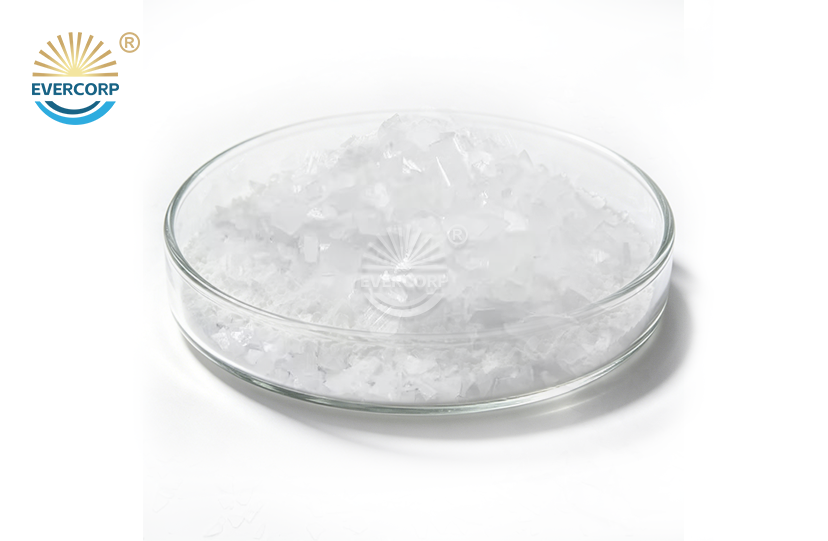
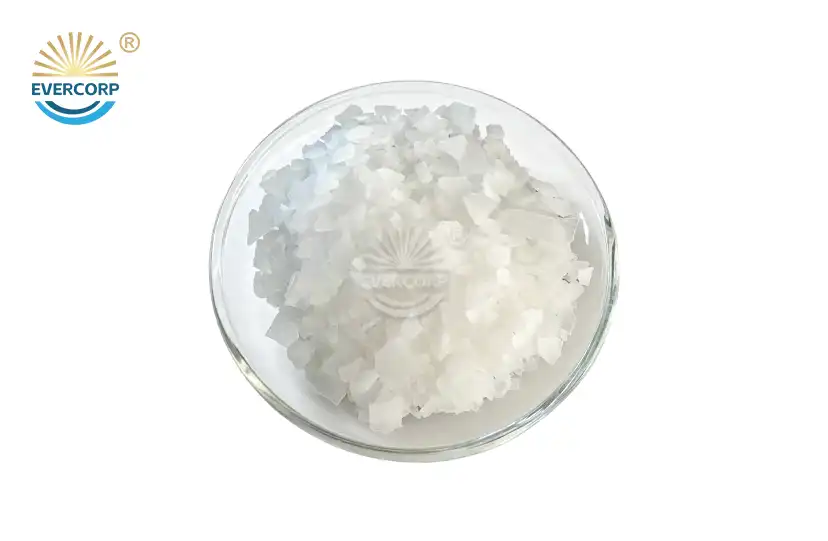
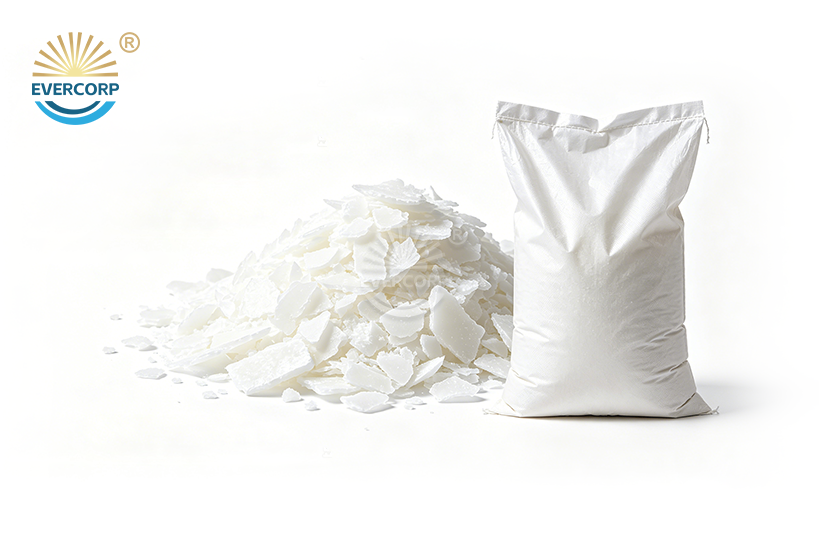
Flakes |
Flakes |
Flakes |
|
Nominal MW |
Around 2400 |
Around 2400 |
Around 2400 |
|
Polymerization route |
Free-radical copolymerization |
Free-radical copolymerization |
Free-radical copolymerization |
|
Commercial positioning |
High-reactivity/newer PCE systems |
Widely established PCE systems |
Widely used in tailored PCE systems |
|
Key purchasing concern |
Reactivity and batch consistency |
Stable established formulation performance |
Compatibility with target formulation |
|
Final concrete performance |
Depends on complete PCE design |
Depends on complete PCE design |
Depends on complete PCE design |
Important: Commercial naming conventions are not completely standardized across all manufacturers. Buyers should evaluate the supplier's actual TDS, COA and polymerization performance rather than relying on the product name alone.


What Makes VPEG 2400 Different?
VPEG is generally associated with a highly reactive unsaturated polyether structure.
For PCE producers, increased macromonomer reactivity can provide more flexibility when designing polymerization processes, especially when manufacturers are interested in lower-temperature or high-conversion synthesis routes.
However, high reactivity does not automatically mean that the resulting PCE will always provide better water reduction or slump retention.
The performance still depends on whether the macromonomer is successfully integrated into the desired polymer architecture.
When Should You Evaluate VPEG?
VPEG 2400 may be worth evaluating when:
· developing a new-generation PCE formulation;
· optimizing polymerization temperature;
· improving raw-material conversion;
· designing PCE for difficult cement systems;
· trying to improve production efficiency;
· replacing an existing polyether monomer source.
Before changing from HPEG or TPEG to VPEG, manufacturers should conduct controlled synthesis trials rather than directly substituting one material kilogram-for-kilogram.
What Makes HPEG 2400 Different?
HPEG 2400 based macromonomers are widely used in commercial PCE production and have established formulation experience in many admixture factories.
For manufacturers already operating stable HPEG formulations, one of the biggest advantages is process familiarity.
Production teams may already understand:
· reaction temperature;
· feeding sequence;
· acid-to-ether ratio;
· initiator demand;
· chain-transfer requirements;
· final polymer viscosity;
· concrete performance.
Some commercial HPEG grades are designed specifically for workability-retention formulations, although this should be regarded as a grade-specific property rather than a universal characteristic of every HPEG material.
When Can HPEG Be a Good Choice?
HPEG may remain an appropriate option when:
· the existing PCE formulation is already stable;
· local cement compatibility has been validated;
· production consistency is more important than redesigning the polymer system;
· customers are satisfied with current concrete performance;
· switching monomers would create unnecessary formulation risk.
A newer monomer is not automatically more economical if changing it requires major reformulation.
What Makes TPEG 2400 Different?
TPEG is another widely used unsaturated polyether macromonomer for PCE synthesis.
Different TPEG grades are used for different PCE formulation objectives.
Depending on the manufacturer and molecular structure, commercial TPEG systems may be incorporated into formulations targeting:
· initial water reduction;
· workability control;
· temperature adaptability;
· specific cement compatibility;
· balanced early strength and flow retention.
As with HPEG and VPEG, the trade name alone cannot predict performance.
A supplier describing a TPEG grade as “high water reduction,” “low-temperature,” or “slump retention” should be able to support the claim through:
· product specifications;
· polymerization data;
· cement paste or mortar testing;
· concrete trial results.
Which Monomer Gives Better Water Reduction?
This question cannot be answered from the monomer name alone.
Water reduction is determined by how effectively the finished PCE disperses cement.
Important structural variables include:
Side-Chain Length
Polyether side chains create steric hindrance.
Changing their length can affect the ability of dispersed cement particles to remain separated.
Grafting Density
A polymer with too few side chains may not create sufficient steric stabilization.
Too many side chains can also change adsorption behavior.
Backbone Structure
The number and distribution of adsorption groups affect how strongly the PCE interacts with cement surfaces and early hydration products.
Polymer Molecular Weight
Molecular weight and molecular-weight distribution influence adsorption, conformation and rheological behavior.
For this reason:
VPEG versus HPEG versus TPEG should be treated as a polymer-design question, not simply a product-name comparison.

Which Monomer Provides Better Slump Retention?
Slump retention depends on more than the original polyether macromonomer.
It can be influenced by:
· PCE adsorption behavior;
· polymer architecture;
· cement C3A content;
· soluble sulfate concentration;
· alkali content;
· cement fineness;
· temperature;
· supplementary cementitious materials;
· aggregate clay content;
· admixture dosage.
A formulation performing well with one cement can lose workability rapidly with another cement.
Therefore, if long slump retention is the target, PCE manufacturers should test the finished polymer using actual cement from the target market rather than selecting HPEG, TPEG or VPEG only from a supplier's marketing description.
What About Sulfate Compatibility?
Sulfate concentration is an important factor in PCE performance.
Dissolved sulfate species can compete with PCE for adsorption sites on cement hydration phases and alter the interaction between the polymer and cement.
Research has shown that PCE molecular architecture influences sensitivity to sulfate.
This means that sulfate compatibility is primarily a property of the complete PCE structure and cement system.
Using VPEG, HPEG or TPEG alone cannot guarantee sulfate resistance.
For markets where cement sources change frequently, such as export markets and large ready-mix operations, compatibility testing should include several representative cement samples.
What About Clay-Tolerant PCE?
Clay contamination in natural sand and aggregates can significantly reduce the effectiveness of conventional PCE.
Certain clay minerals, particularly expandable layered clays, can strongly interact with polyether-containing superplasticizers.
This can consume part of the admixture before it performs its intended function on cement.
As a result, concrete may show:
· lower initial slump;
· rapid slump loss;
· increased PCE demand;
· inconsistent batch performance.
Clay tolerance normally requires deliberate polymer design.
Changing from HPEG to VPEG or TPEG by itself should not be considered a universal solution.
How Should a PCE Manufacturer Compare VPEG, HPEG and TPEG?

The most reliable method is a controlled side-by-side trial.
Step 1: Check Raw-Material Specifications
Compare:
· appearance;
· molecular weight;
· molecular-weight distribution where required;
· unsaturation;
· hydroxyl value;
· moisture;
· solids;
· double-bond retention or related reactivity indicators.
Step 2: Run Controlled Polymerization Trials
Keep major synthesis variables as consistent as possible.
Record:
· reaction temperature;
· feeding behavior;
· reaction stability;
· final solids;
· viscosity;
· pH;
· polymer appearance;
· conversion indicators.
Step 3: Test the Finished PCE
Do not stop at raw-material analysis.
Evaluate:
· cement paste flow;
· mortar flow;
· initial concrete slump;
· 30-, 60-, 90- and 120-minute workability;
· water-reduction performance;
· setting time;
· air content;
· bleeding or segregation;
· early strength;
· 28-day strength.
Step 4: Test More Than One Cement

A PCE formulation intended for export should ideally be evaluated with different cement chemistries.
This is especially important when selling admixtures to the Middle East, Latin America, Africa or Southeast Asia, where local cement and aggregate characteristics may differ significantly.
Step 5: Compare Total Production Cost
Do not compare only macromonomer price per ton.
The real calculation should include:
· macromonomer dosage;
· acrylic acid consumption;
· initiator demand;
· chain-transfer agent;
· reaction energy;
· production cycle;
· failed batches;
· formulation additives;
· customer complaints;
· final PCE dosage in concrete.
A slightly more expensive macromonomer may be economical if it improves conversion or formulation efficiency.
The opposite can also be true.
What Should Buyers Request From a Polyether Monomer Supplier?
Before approving a new VPEG, HPEG or TPEG supplier, request:
· current Technical Data Sheet;
· Safety Data Sheet;
· batch-specific Certificate of Analysis;
· representative production sample;
· packaging specification;
· storage recommendation;
· quality-management documentation;
· technical support for polymerization trials.
For industrial PCE production, batch-to-batch consistency is often more important than one unusually good laboratory sample.
FAQ
Is VPEG always better than HPEG?
No. VPEG may offer advantages in certain polymerization systems, but final PCE performance depends on the complete formulation and cement system.
Is TPEG better for slump retention?
Some TPEG formulations may be designed for specific flow or workability requirements, but TPEG as a general product category does not automatically guarantee longer slump retention.
Can I directly replace HPEG with VPEG at the same dosage?
It is not recommended without laboratory testing. Differences in reactive structure may require changes to the acid-to-ether ratio, initiator system, chain-transfer agent or feeding conditions.
Does 2400 molecular weight guarantee high water reduction?
No. Molecular weight is only one parameter. Polymer architecture, grafting density, adsorption behavior and cement chemistry are equally important.
Which monomer is best for high-sulfate cement?
There is no universal answer. Sulfate tolerance should be evaluated using the finished PCE and actual cement.
What is the best way to select a PCE monomer supplier?
Compare technical specifications, batch consistency and polymerization performance, then validate the resulting PCE using your own cement and formulation.
Source PCE Polyether Monomers From EverStar Group
EverStar Group supplies polyether macromonomers for manufacturers producing polycarboxylate ether superplasticizers.
Our product portfolio includes VPEG, HPEG and TPEG-based grades for different formulation and manufacturing requirements.
Customers can request:
· TDS;
· SDS;
· batch-specific COA;
· samples for laboratory polymerization;
· commercial quotations;
· export documentation.
If you are evaluating a new polyether monomer source, we recommend conducting a controlled polymerization and cement-compatibility trial before bulk purchasing.
Contact EverStar Group for current specifications and sample availability.
Email: info@cneverstar.com
References
1. Yamada, K., Takahashi, T., Hanehara, S. & Matsuhisa, M. Effects of the Chemical Structure on the Properties of Polycarboxylate-Type Superplasticizer. Cement and Concrete Research, 2000.
2. Winnefeld, F., Becker, S., Pakusch, J. & Götz, T. Effects of the Molecular Architecture of Comb-Shaped Superplasticizers on Their Performance in Cementitious Systems. Cement and Concrete Composites, 2007.
3. Plank, J., Sakai, E., Miao, C.W., Yu, C. & Hong, J.X. Chemical Admixtures—Chemistry, Applications and Their Impact on Concrete Microstructure and Durability. Cement and Concrete Research, 2015.
4. Influence of the Structures of Polycarboxylate Superplasticizer on Its Performance in Cement-Based Materials—A Review. Construction and Building Materials, 2020.