Complete Guide to TPEG 2400 Low-Temperature Fluidity Monomer
When cold weather threatens your concrete projects with slump loss and poor workability, TPEG 2400 Low-Temperature Fluidity Monomer emerges as the engineered solution. This specialized macromonomer maintains molecular flexibility at temperatures as low as -15°C, ensuring polycarboxylate superplasticizers deliver consistent dispersion performance throughout winter construction. Unlike conventional PCE monomers that stiffen and lose effectiveness below 10°C, this ~2400 molecular weight compound features optimized ethylene oxide chains that prevent viscosity increases, allowing concrete to remain pumpable and workable without auxiliary heating systems.
- Understanding TPEG2400 Monomer: Properties and Characteristics
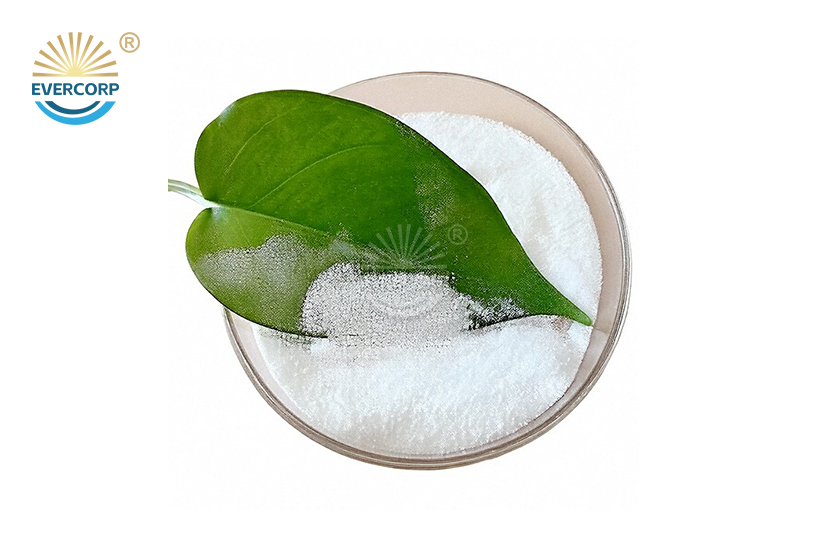
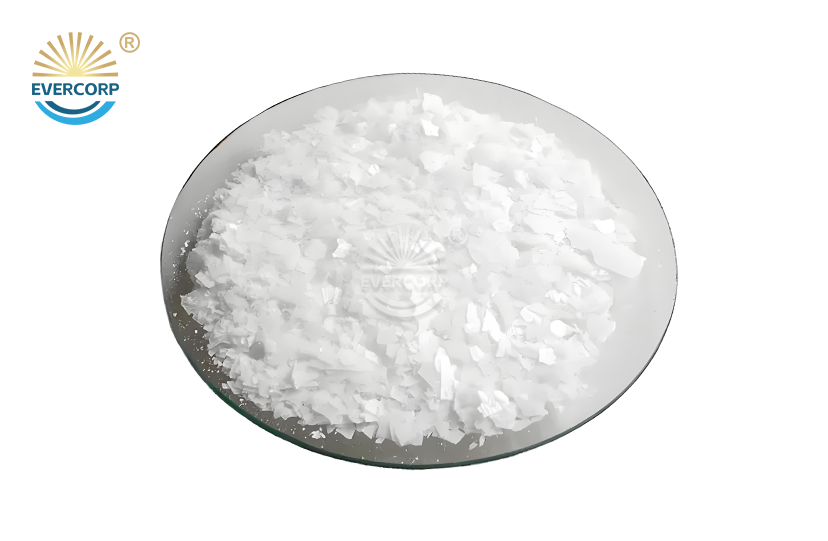
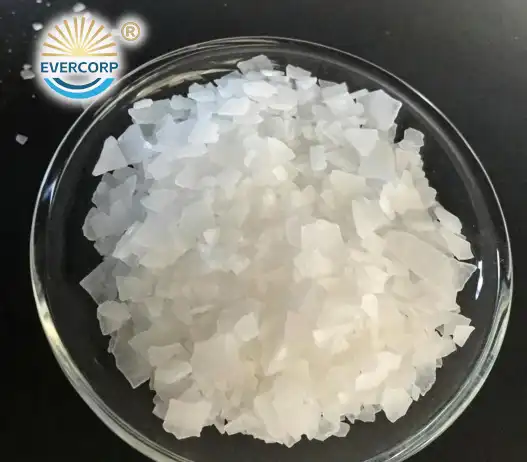
This cold-weather macromonomer is unique in the way it is made chemically, which makes it useful for making concrete admixtures. The product is mostly made up of white to off-white flakes whose molecular weight is carefully kept at about 2400 daltons. In cement paste systems, this particular chain length strikes a good mix between hydrophilic performance and steric blocking effects.
(1). Chemical Identity and Molecular Structure
This monomer can be found in world chemistry databases by its CAS‑31497‑33‑3. Polyoxyethylene chains that end in reactive vinyl groups make up its molecular backbone. The unsaturation level staying at or above 0.35 mmol/g is what makes this structure so useful; this is a number that directly relates to how well polymers are formed. Your team's copolymerization of this monomer with acrylic acid turns those double bonds into anchor points for making the PCE backbone. The hydroxyl number between 22 and 27 mg KOH/g shows that the ethylene oxide addition process is being carefully controlled. This stops any unwanted branches that could hurt the performance at low temperatures.
(2). Physical Properties and Performance Indicators
If the solid content is more than 98%, there will be little to no moisture interference during storage and processing. This high level of purity saves your batch stability because water contamination can cause polymerization or hydrolysis to happen too soon. A 5% water solution has a pH between 5.0 and 7.0, which means it can work with alkaline cement environments without speeding up the hydration reactions. The ethylene oxide segments in this monomer can still move around when the temperature drops to 5–10°C. When the same conditions are applied to standard HPEG or VPEG alternatives, the chains become stiffer, which makes it harder for the particles to stick to them. This makes a direct difference between mixes that need mechanical vibration or hot water additions to work and ones that work easily through dense rebar congestion.

(3). Safety and Quality Compliance Standards
The factories that make this macromonomer have to meet strict worldwide approval standards. To get into the European market, REACH compliance makes sure that all of the materials used go through a thorough toxicological evaluation. ISO 9001 approval proves that differences between batches stay within accepted limits. There are three tests that are done on every production run: iodine value testing to make sure the double bonds stay together, gel permeation chromatography to make sure the molecular weight distribution is correct, and Karl Fischer titration to make sure the moisture content is less than 0.3%. These quality control steps are important because even small changes in hydroxyl value or unsaturation can have big effects on how well the final PCE works in winter concrete Applications.
- Comparing TPEG2400 with Other Low-Temperature Fluidity Monomers
To choose the best macromonomer for making concrete in cold climates, you need to know how different molecular structures react to temperature stress. A number of options are available on the market, and each one has its own pros and cons.
(1). TPEG2400 Versus TPEG1000 Molecular Weight Variants
The molecular weight of TPEG 2400 Low-Temperature Fluidity Monomer has a big effect on how PCE side chains connect with cement particles. The 1000 dalton version has shorter ethylene oxide chains that allow for fast initial diffusion but not much slump retention. Your concrete becomes workable right away, but it stops being wet in 45 to 60 minutes. The 2400 molecular weight version makes those side chains longer, which makes the steric repulsion forces stronger and keeps particles apart for 90 to 120 minutes. This longer workability window keeps the mix from stiffening too soon when it has to be transported over distances of more than 30 kilometers. The longer chains also have lower glass transition temperatures, which means that molecules can still be flexible even when the temperature outside is getting close to freezing. Contractors who work in Alaska or northern Canada depend on this property to get rid of the need for heated water, which makes their jobs more difficult and costs more in energy.
(2). Performance Benchmarks in Cold Environment Testing
At room temperature (5°C), tests done in the lab show that the different types of monomers are different in ways that can be measured. When compared to baselines at room temperature, concrete mixed with standard HPEG-based PCE has 15-20% less slump retention. When this specialized macromonomer is added to the same mixture, it keeps 95–98% of its original flow properties. Using rotational viscometers for rheological testing shows that yield stress only rises by 8–12% at 5°C, while it rises by 35–40% for regular monomers. During overnight curing at temperatures dropping toward -5°C, formulations based on this low-temperature platform maintain flowability and workability, helping concrete remain pumpable without heated mixing water.
(3).Selection Criteria for Application-Specific Requirements
Which of the available monomers to use depends on a number of project factors. The 2400 molecular weight choice is best for building infrastructure in the Nordic areas where winter temperatures stay below 0°C. Seasonal building in climates that are changing might work better with smaller molecular weight options when the weather is nicer. For high-strength concrete uses that need water-to-cement ratios below 0.35, longer ethylene oxide chains are needed for better dispersion. For building uses, self-compacting concrete needs to have stable rheology throughout placement. The longer side chains stop segregation and bleeding, which would lower the quality of the surface finish. By comparing these factors to your unique production needs, you can find the most cost-effective option without putting too many limits on the material's performance.
- Procurement Considerations for TPEG2400 Monomer
It takes more than just comparing prices to find a reliable source of this specialized macromonomer. Strategic procurement strikes a balance between making sure quality, making sure deliveries go smoothly, and following the rules.
(1). Direct Manufacturer Versus Distributor Sourcing
There are a number of good reasons to buy chemicals straight from the makers. You can get help from expert support teams that know about the processes of polymerization and the rheology of concrete. These experts can look at GPC traces and iodine values to find out why batch performance changes in ways that aren't expected. With factory-direct connections, you can also change the hydroxyl values or molecular weight ranges to fit the minerals in your area. Distributor networks make it easy to get products in different areas and let you order smaller amounts for testing purposes. On the other hand, there isn't a lot of technical detail and there may be problems with authenticity because fake or weakened materials sometimes make their way into developing market sales channels.
(2). Order Quantities and Lead Time Management
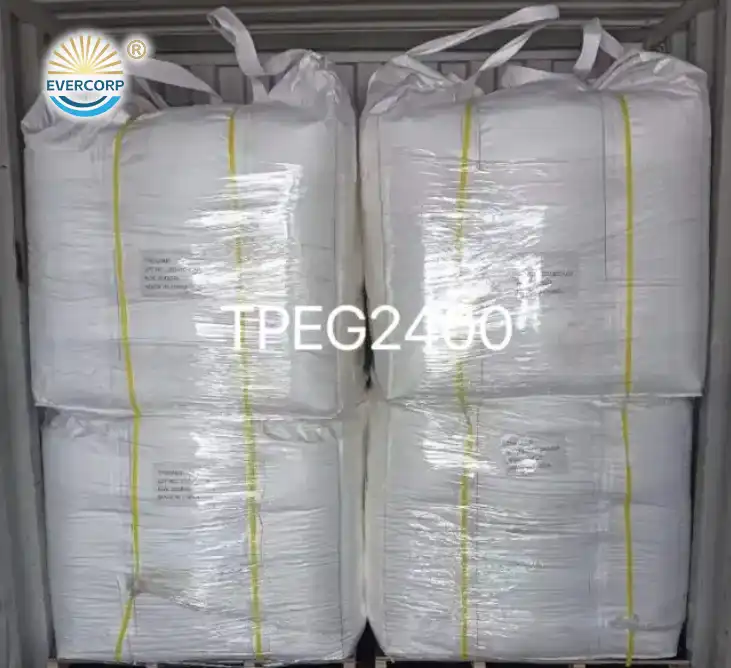
Trial orders of TPEG 2400 Low-Temperature Fluidity Monomer usually begin with shipments of one metric ton, which is equal to about 40 bags of 25-kilogram packaging. This amount lets you do full pilot-scale tests without spending a lot of money. For production-scale purchases, orders must be at least five metric tons in order to justify the logistics of shipping them in containers. Companies that use more than 100 metric tons a year should talk about dedicated production campaigns. These agreements lock in better prices and guarantee monthly allocations during the busiest demand times in the winter. Lead times depend on how busy the supplier is and where the goods are being shipped from. Standard items from a well-stocked warehouse usually ship within three days. It takes five to seven days to synthesize and check the quality of molecules with specific molecular weight requirements or hydroxyl value changes.
(3). Certification Requirements and Sample Protocols
Every package needs to come with the right paperwork to make sure it gets through customs and that the quality can be tracked. Safety Data Sheets, Certificates of Analysis, and Technical Data Sheets are available in more than one language from suppliers who follow REACH rules. Third-party testing reports from independent laboratories such as SGS or Intertek provide additional confirmation of claimed specifications. Before making big purchases, ask for 0.5 to 1 kilogram samples to make sure they are compatible. Check those samples against the cement sources and gravel grades that you use. The performance can vary a lot depending on the raw materials that are available in your area. Reliable sellers give these samples away for free because they know that technical proof lowers the risk of doing business for both parties.
- Trusted Suppliers and Brands of TPEG2400 Monomer
Finding trustworthy sources for macromonomers that are found in cold climates protects the quality of your production and the continuity of your supply chain. There are a number of things that set exceptional suppliers apart from commodity vendors.
(1). Global Manufacturer Profiles
EverStar Group has several industrial sites in the southern, eastern, and northern regions. These facilities can hold more than 5,000 tons of inventory. Since we started making chemicals in 2012, 14 years ago, we help people in more than 50 countries make concrete admixtures. Some of the Fortune 500 companies and major construction material companies, like CEMEX and CHT, are among our clients. Being close to major ports lowers logistics costs and speeds up the loading of containers—standard shipments leave within 72 hours of order confirmation. Our network of facilities can produce more than 50,000 tons of goods every year, and we put 5% of our profits back into research and development. This dedication leads to constant improvements in molecular design and the efficiency of synthesis.
(2). Verification of Authorized Distribution Networks
In specialized chemistry markets, fake products really do pose a threat. Unauthorized sellers may mix real goods with cheaper ones to weaken them or lie about hydroxyl values by falsifying paperwork. Protect your business by checking the credentials of your suppliers in a number of different ways. Check that the Certifications being claimed match the records of the relevant authorities. The European Chemicals Agency website can be used to confirm REACH registration numbers. Ask current customers who have used similar applications to give you references. Reliable suppliers are happy to put potential customers in touch with current customers so that the customers can talk about how quickly the technical support team responds and how consistent the batches are. Check to see if suppliers offer full service packages that go beyond just delivering products. Support in multiple languages and availability 24 hours a day, seven days a week shows a strong dedication to customer success. Offering mixing tools, how-to videos, and on-site training shows knowledge that commodity buyers can't copy.
(3). Long-Term Partnership Benefits
Building long-term ties with TPEG 2400 Low-Temperature Fluidity Monomer suppliers has benefits that transactional buying can't beat. Account managers are dedicated to learning about your specific production problems and making suggestions for changes to the formula as cement sources change with the seasons. Priority distribution during supply constraints makes sure that your production keeps going even when spot market access drops. Through collaborative development programs, you and other people can work together to make molecular weights or unsaturation levels that are best for the weather in your area. Our team can help you come up with OEM and ODM formulas, and we can also customize the packaging to fit your brand's style. Logistics tracking tools let you see the state of shipments in real time, so unexpected delays don't stop production. These parts of a partnership give you a competitive edge that goes far beyond just buying chemicals.
- Practical Applications and Case Studies of TPEG2400 in Polymers
Real-world performance data shows that this specialized macromonomer solves common construction problems that come up in cold weather for a wide range of project types.
(1). Cold-Climate Infrastructure Development
Putting down concrete for a high-speed rail project in northern Canada was hard from October to March, when the temperature regularly dropped to -10°C. In the past, PCE formulations needed systems for heating mixing water, which used a lot of energy and made running a batch plant more difficult. When the low-temperature macromonomer was changed to a polycarboxylate superplasticizer, there was no need for any heating at all. Even though it was -8°C outside, the concrete kept its 210mm slump for 90 minutes after it was mixed. The increase in compressive strength was the same as the baseline performance in the summer, reaching 35 MPa after seven days. The project cut down on extra heating costs and sped up building by six weeks. For example, crews kept filling foundations all through November, when in the past winter shutdowns would have stopped work.
(2). High-Strength Self-Compacting Concrete Applications
Self-compacting concrete that could flow through crowded support in densely packed shear wall sections was needed for building tall buildings in Stockholm. Different changes in temperature between morning and afternoon (8°C in the morning and 18°C in the afternoon) made it hard to keep things consistent. When PCE was made with standard monomers, the flow table spread changed by 25% over that temperature range. Using this cold-adapted macromonomer in a new formulation cut flow variation to less than 8%. Intricate formwork was filled with concrete that didn't move at all, so there were no bug holes and the finish quality was good enough to be used straight off the forms. The stable rheology across temperature changes cut down on waste from rejected batches and made it easier to predict the surface finish.
(3). Extended-Distance Ready-Mix Transport
A regional ready-mix company that worked with rural construction sites had to deal with average delivery times of 90 minutes from the plant to the site. Deliveries went well in the summer, but temperatures between 10 and 15°C in the spring and fall caused too much slump loss. It was common for concrete to not be easy to work with when it came, so water had to be added, which weakened its strength and sturdiness. The working time was increased by 40 minutes when PCE made from the 2400 molecular weight monomer was used. When drivers got to remote sites, they always brought concrete that still had 180–200 mm of slump, so there was no need for field water additions. There was a noticeable rise in customer satisfaction, and the manufacturer took market share away from competitors who were still having problems with performance in cold weather.
- Conclusion
The TPEG 2400 Low-Temperature Fluidity Monomer solves the concrete industry's long-standing problems with cold-weather performance by carefully designing its molecular structure. Its about 2400 molecular weight ethylene oxide chains stay flexible at temperatures where most monomers become hard and stop working. To be successful in buying, you need to know about the following specifications: solid content above 98%, unsaturation above 0.35 mmol/g, and hydroxyl values between 22 and 27 mg KOH/g. When you compare this macromonomer to others like TPEG1000, you can see that it performs better in terms of keeping its shape and being fluid at low temperatures. Buying from certified makers makes sure that you follow the rules and gives you access to expert help that you can't get from commodity sellers. Real-life case studies show measurable benefits, such as no longer having to pay for heating, stable rheology even when temperatures change, and longer working times for long-distance transport.
- FAQ
(1). What minimum order quantity applies to TPEG2400?
For first-time sales, the standard minimum order quantity is one metric ton, which is equal to 40 bags of 25-kilogram packing. This amount allows for full pilot-scale testing of a number of different concrete mix designs. For production-scale purchases, the minimum weight needed to justify shipping costs in a container is usually five metric tons. Companies that use more than 100 metric tons of the product each year should look into dedicated production campaign agreements that lock in prices and guarantee monthly allocations during the busiest winter months. Suppliers also offer free samples weighing 0.5 to 1 kilogram for testing how well they work with your chosen cement sources and material grades.
(2). How does molecular weight affect cold-temperature performance?
The ethylene oxide chain length is directly affected by molecular weight. This length affects the steric forces that push cement particles apart. The 2400 molecular weight version has longer side chains that keep particles apart for 90 to 120 minutes, even when the temperature outside is 5°C. Shorter versions with 1000 molecular weight spread out quickly at first, but they don't hold their shape well—concrete loses its fluidity in 45 to 60 minutes. Longer chains also have lower glass transition temperatures, which means that molecules can still be flexible when the temperature is getting close to freezing. This feature gets rid of the need for hot water in cold places, which makes operations simpler and uses 30–50% less energy.
(3). Can this monomer blend with existing HPEG formulations?
Different macromonomers can work together if their chemical structures and how fast they polymerize are similar. During transitional times, gradual replacement lets you see how performance has changed without having to completely change the formulation. Adding 20 to 30 percent of this special monomer to HPEG-based systems that are already in use can often make them more fluid at low temperatures while keeping the same processing parameters. To get the best molecular weight distribution in the final PCE, acrylic acid ratios and polymerization conditions usually need to be changed for full replacement. This process can be sped up by asking your seller for technical help. Formulators with a lot of experience can suggest starting ratios based on your cement's reaction and how well you want the concrete to work.
- Partner with EverStar Group for Cold-Climate Concrete Solutions
EverStar Group sells TPEG 2400 Low-Temperature Fluidity Monomer directly from the factory. They offer 14 years of experience making chemicals and full technical support. Our three regional production sites keep more than 50,000 tons of yearly capacity and keep 5,000 tons of stock on hand to make sure we have a steady supply during the busiest winter months. We follow international quality standards and our products are supported by REACH compliance and ISO 9001-certified processes, with third-party testing available from SGS or Intertek. In addition to supplying products, we also create OEM and ODM formulas and offer free samples for testing with your local aggregates every day. Our technical support is available 24/7 in multiple languages. Contact info@cneverstar.com or visit cneverstar.com right now to get your Certificate of Analysis and Technical Data Sheet and talk about how our cold-climate macromonomer can help you make more winter concrete while using less energy and working longer.
- References
1. Plank, J., Sakai, E., Miao, C. W., Yu, C., & Hong, J. X. (2015). Chemical admixtures—Chemistry, applications and their impact on concrete microstructure and durability. Cement and Concrete Research, 78, 81–99.
2. Li, Y., Yang, C., Zhang, Y., Zheng, J., Guo, H., & Lu, M. (2014). Study on dispersion, adsorption and flow retaining behaviors of cement mortars with TPEG-type polyether kind polycarboxylate superplasticizers. Construction and Building Materials, 64, 324–332.
3. Xie, Y., et al. (2023). Understanding the temperature-dependent workability of cement paste with polycarboxylate superplasticizer. Journal of Building Engineering, 76, 107408.
4. Winnefeld, F., Becker, S., Pakusch, J., & Götz, T. (2007). Effects of the molecular architecture of comb-shaped superplasticizers on their performance in cementitious systems. Cement and Concrete Composites, 29(4), 251–262.
5. Puertas, F., Santos, H., Palacios, M., & Martínez-Ramírez, S. (2005). Polycarboxylate superplasticiser admixtures: effect on hydration, microstructure and rheological behaviour in cement pastes. Advances in Cement Research, 17(2), 77–89.
6. Lei, L., & Plank, J. (2014). Synthesis and properties of a vinyl ether-based polycarboxylate superplasticizer for concrete possessing clay tolerance. Industrial & Engineering Chemistry Research, 53(3), 1048–1055.