Why Concrete Retarders Are Important in Modern Construction?
Concrete retarders, which act as specialized additives that slow down the hydration process of cement to increase workability time, have become indispensable in the modern building industry. As building projects get bigger and more complicated, these chemical solutions solve important problems like flash setting during hot weather pours, cold joint formation in mass concrete uses, and slump loss during long-distance transport. By giving builders reliable control over setting times, retarders help them get better finishing results while keeping the structure's integrity in a wide range of project situations.
Understanding Concrete Retarders and How They Work
Chemical Composition and Mechanisms
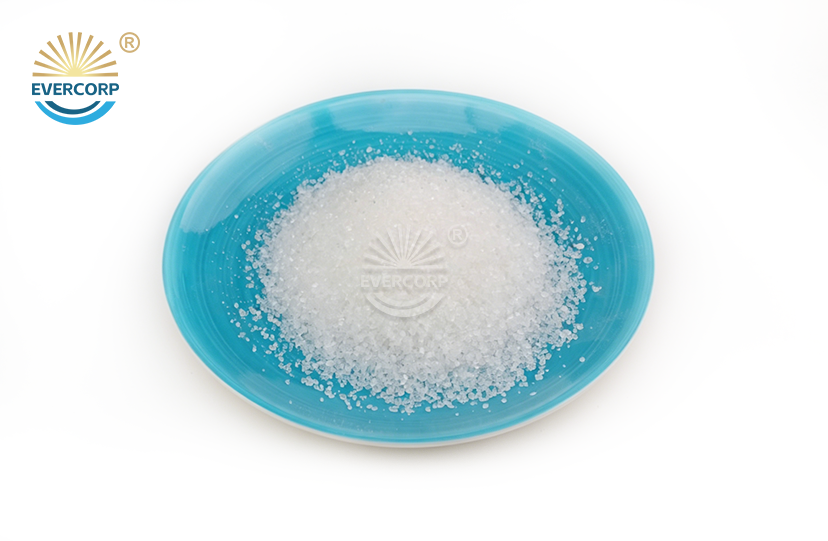
Set retardation is caused by certain functional groups in chemistry that stop the formation of calcium silicate hydrate crystals for a short time. Hydroxycarboxylic acids are often used in modern products, with sodium gluconate being one of the best examples. This white crystalline powder is ≥98.0% pure and works through a linear dose-response mechanism. It doesn't have the flash-set risks that come with options based on citric acid or sugar. It gives reliable delay windows of 2 to 7 hours at doses between 0.05% and 0.15% by cement weight. This lets procurement managers set exact handling times for complex pours.
Concrete retarders of the newer generation, unlike older lignosulfonate-based ones, keep the pH level in solution within a limited range of 6.2 to 7.8. This makes them compatible with polycarboxylate ether superplasticizers, which are often used in high-performance concrete mixes. The chloride level stays below 0.05%, which keeps the support steel from rusting. This is an important requirement for building projects that are meant to last for 50 years.
Physical Forms and Application Contexts
There are both liquid solutions and powder forms of retarding admixtures. Liquid forms are easier for automatic batching at ready-mix plants, while powder grades last longer and cost less to ship when buying from other countries. Which form to use relies on how much space you have for storage, the batching tools you have, and the humidity level where you live. When it comes to volumetric accuracy, ready-mix workers who work on multiple jobsites usually prefer liquids. On the other hand, precast makers often keep powders on hand for stocking flexibility.
Premium retarders can be used for more than just building. The same molecule works great in alkaline cleaning, bottle washing systems, and metal treatment processes at concentrations of 2% to 5%. This means that distributors can use the same SKU for construction, industrial cleaning, and even food-grade Applications that are in line with FCC, USP, and BP guidelines.
Benefits of Using Concrete Retarders in Modern Construction Projects
Enhanced Workability and Placement Flexibility
For large-scale structures, the concrete must be laid in a way that doesn't leave any weak spots. Concrete retarders keep the slump in place during long placement cycles. This lets teams work with complicated formwork designs without lowering the quality of the consolidation. Controlled hydration delay stops the concrete from stiffening too quickly between lifts, which could weaken the bond between lifts in tunnel lining projects or airport runway extensions where pours happen continuously for 8 to 12 hours.
According to ASTM C403, tests show that retarders that are properly dosed not only make the mix easier to work with for longer, but they also often make the 28-day compression strength 5% to 10% higher than control mixes. This increase in strength comes from more even crystal growth during the longer induction time, which makes the microstructure stronger. When purchasing engineers look at offers from suppliers, they should ask for performance data that shows strength ratios higher than 110% at normal test ages.
Hot Weather Concreting Solutions
When the temperature outside is above 35°C, the cement hydrates much faster, cutting the time it takes to set for the first time from 4 hours to less than 90 minutes. This speeding up of the heat causes cracks on the surface, lower final strength, and problems with finishing. These effects are canceled out by retarding admixtures, which make the dormant phase last longer. This lets evaporative cooling happen and the healing process work correctly. During the summer, retarders are often added to bridge deck fills in southwestern U.S. states to keep quality standards high.
The improved formulations' straight dosage response gives safety gaps that natural sugar-based retarders don't have. With natural sugar-based retarders, even a small overdose can cause setting delays that last for days or failure to set at all. This reliability cuts down on guessing in the field, which can cause project delays.
Environmental and Safety Advantages
Biodegradable retarders that meet OECD 301E standards and break down more than 90% in 28 days are used because people care about the environment. These eco-friendly choices work better than traditional chelators like EDTA at removing Fe³⁺ at alkaline pH levels above 11. This is important for coastal building where high-sulfate groundwater mixes with cementitious systems. Lower amounts of sulfate (0.05%) and heavy metals (Pb ≤10 ppm) are in line with standards for LEED-certified projects and city water quality rules.
Better safety features help the people who work with these products. When compared to acidic options, the near-neutral pH makes it less likely that the product will irritate the skin, and the fact that it meets REACH, FDA, HALAL, and KOSHER standards means that it will be accepted by regulators around the world.
How to Choose the Right Concrete Retarder for Your Project
Evaluating Project-Specific Requirements
The selection factors start with a study of the climate. In warm zones, projects may only need two to three-hour delays, which can be achieved with a 0.05% dose. In contrast, building in the desert needs five to seven-hour windows, which can only be achieved with a 0.12% to 0.15% dose. Procurement managers should ask for sample batch data that is specific to the site and is matched to the fineness of the cement, the amount of water in the gravel, and the ratios of water to cement.
It is necessary to test compatibility with current mixing packages. When concrete retarders are mixed with air-entraining agents or viscosity-changing additives, slump-loss tests and air-void spacing analysis must be done according to ASTM C231 to make sure that the goal air content of 5% to 7% stays stable over the longer placement time. Combinations that don't work well together can lead to quick slump collapse or too much bleeding, which can damage the quality of the surface finish.
Comparative Analysis of Supply Options
There are a lot of different formulas on the market, but sodium gluconate-based retarders are the best for buying in bulk. Distributors can easily keep track of their stock because they come in both food-grade and technical grade. This way, they can serve both concrete builders and industrial cleaning clients with approved products that meet FCC, USP, and BP standards. This variety in the market makes storing easier and improves the efficiency of cash flow.
To figure out the total cost of ownership, you have to look at more than just unit prices. Loss on drying specs (≤0.5%) and lowering substance content (≤0.5%) have a direct effect on the concentration of the active ingredient, which in turn changes the dosage rates that are used in real life. Products with more pollutants or wetness need higher doses to get the same delay effect, which cancels out any savings that might be seen. When you buy directly from a vertically integrated producer, you skip the middleman markups and save 20% to 40% on costs. Centralized quality control also makes sure that the products are the same from batch to batch.
Procurement Strategy Considerations
Sourcing choices are affected by things like minimum order amounts, shipping wait times, and the infrastructure for transport. When suppliers have plants close to big ports, freight costs are lower and restocking cycles are faster. Because 5-day trial services are available, buying teams can test performance with local aggregates before placing large orders. This lowers the risk of compatibility issues. When shipping goods across time zones, it's important to have technology help in multiple languages and customer service available 24 hours a day, seven days a week.
Strategic benefits come from long-term relationships with makers that offer OEM/ODM formulation creation. Custom formulas that are made to work best with local raw materials, like high-alkali fly ash or marine-dredged aggregates, give better performance than off-the-shelf goods. Access to proprietary mixing tools and on-site training speed up the training of workers, which cuts down on application mistakes that cause expensive project delays.
Application Best Practices and Troubleshooting for Concrete Retarders
Dosage Guidelines and Addition Timing
To dose correctly, you need testing equipment that is accurate to within 0.01%, especially when you are aiming for small retardation gaps. Adding concrete retarders during the first water charge makes sure they are evenly spread, but adding them later, in the middle of the mix, can sometimes make them work better. As part of quality control, ASTM C403 penetration resistance tests should be done every 30 minutes. This will allow real-time hydration curves to be created that prove the design assumptions.
Overdosing is still the most common mistake made in the field. It happens when workers try to fix sudden increases in temperature without recalculating the cement mass-based ratios. Recovery from a serious overdose may need controls on the cure environment and long-term tracking of strength according to ASTM C39. Because premium retarders have a linear reaction, there is some room for error. However, for large-scale operations, it is still best to keep detailed records of each batch and use automatic dispensing systems.
Storage and Shelf Life Management
Powder retarders stay stable for a year if they are kept in cases that are sealed and covered from UV light and kept at temperatures between 5°C and 30°C. To keep liquid concentrates from crystallizing, they need to be stored in a frost-free area. Purchasing teams that are in charge of multiple locations' stock should use first-in, first-out rotation rules and stability tests every three months to make sure of the purity of the products they sell. Each package needs to have a Certificate of Analysis (COA), Safety Data Sheets (SDS), and Technical Data Sheets (TDS). These documents make it possible for checks to follow the goods.
Even though sodium gluconate-based formulas are not very toxic, handling methods should include suggestions for personal protective equipment (PPE) for eye and respiratory safety and reduce the amount of dust that is created during powder transfer. Following the rules set by ISO 9001 quality management systems makes sure that providers keep written records of their control over the production, packing, and shipping processes.
Compatibility with Advanced Admixture Systems
These days, most concrete mixes have five or more chemical admixtures. Lab rheology tests are needed to see if retarders are compatible with polycarboxylate-based superplasticizers, shrinkage-reducing admixtures, and rust inhibitors. Mixtures that don't work well together can cause sudden increases in viscosity or delayed air release, which makes it harder to pump. If a supplier offers pre-blended admixture packages, there is no chance of mistakes when mixing in the field. However, custom formulas offer optimization options for specific uses like self-consolidating concrete or ultra-high-performance mixes.
Future Trends and Innovations in Concrete Retarder Technology
Sustainable Chemistry Advancements
Because the building industry wants to be carbon neutral, it is researching bio-based concrete retarders that come from farm waste. The new goods work just as well as the old ones, but they have 30% to 40% less carbon built into them. Manufacturers who put 5% of their annual income into research and development are making hybrid formulations that have both retardation and internal curing qualities. These formulations are designed to make single-component systems easier to work with and last longer.
Circular economy ideas affect how products are made, and molecules that break down easily, like sodium gluconate, are better for getting rid of waste at the end of their useful life than manmade chelators that don't break down. EcoVadis Silver-rated sellers show they care about the environment by having third parties check their energy use, water use, and trash management for factories that produce more than 50,000 tons of goods every year.
Digital Integration and Quality Assurance
IoT-enabled mixing systems now keep track of the rates at which retarder is added in real time and send that information to the cloud, where AI algorithms use weather forecasts and mix design factors to guess how the setting will behave. This digital integration makes quality control more accurate and gives buying managers performance data that help them negotiate with suppliers. Blockchain-based tracking systems make sure that Certifications like HALAL, KOSHER, and REACH are real. This stops fake goods from getting into global supply lines.
Predictive repair for storage bins and dispensing equipment cuts down on downtime as much as possible. With remote tracking, suppliers can offer proactive technical help and change dosage suggestions on the fly as project conditions change. These technological advances make ties between makers and contractors stronger by putting the focus on project success instead of just trading goods.
Strategic Supplier Partnerships
Forward-thinking buying strategies stress that suppliers can do more than just meet product requirements. Manufacturers with plants in the Southern, Eastern, and Northern regional groups protect themselves against supply problems and cut down on shipping costs. Diversified business structures that serve the markets for Food Additives and concrete show that they are financially stable and have a lot of technical knowledge. Getting certifications from SGS, Intertek, and the Responsible Care® program shows that you care about safety and the environment.
Contractors can become more skilled faster and learn from mistakes less often if they have access to application engineering resources like usage videos, product guides, and math tools. Free sample programs let you test them on the job site before making big promises, which lowers the risk of poor performance. World-class seller partnerships that support multi-year procurement deals have a lot of technical depth, good logistics, and quick responses to customer service requests.
Conclusion
It is impossible to say enough about how important concrete retarders are in modern buildings. These specialized chemicals solve important problems like placing in hot weather and managing the temperature of large amounts of concrete. Newer versions are better for the environment because they break down naturally and are less harmful. When making purchases, companies should look for suppliers that offer technical-grade sodium gluconate that has been tested and shown to meet ASTM C494 Type B standards. These suppliers should also have full certifications and quick technical support. As the need for infrastructure grows and rules about sustainability get stricter, builders can meet changing industry standards while keeping costs low by forming partnerships with makers that focus on new ideas.
FAQ
Can retarders reduce final concrete strength?
When used in the amounts suggested by the maker, concrete retarders usually make mixes stronger after 28 days by 5 to 10 percent compared to mixes that haven't been fixed. The longer hydration time lets crystals form more completely, which makes the microstructures thicker. Overdosing can slow down strength gain, which means that fixing and tracking must last longer according to ASTM C39 guidelines.
How do I calculate the correct dosage for my project?
Doses range from 0.05% to 0.15% by mass of cement, based on how long of a wait is wanted and the temperature of the area. It is still necessary to do site-specific test runs that are tuned to local materials. Actual retardation curves are set by penetration resistance tests according to ASTM C403. These may be different from general standards because of changes in the cement's alkali content and the amount of water in the aggregate.
Are eco-friendly retarders as effective as traditional options?
In many situations, biodegradable retarders based on sodium gluconate work better than regular ones. Their linear dose-response gets rid of flash-set risks and achieves >90% decline within 28 days, which is what OECD 301E standards say should happen. They work especially well in high-sulfate seaside settings because they are better at chelating iron at alkaline pH levels.
Partner with EverStar Group for Reliable Concrete Retarder Supply
EverStar Group has factory-direct concrete retarders that meet the standards for ASTM C494, EN 934, and REACH compliance and are ready to help you with your building projects. Our ISO 9001, HALAL, and KOSHER standards back up our production capacity of more than 50,000 tons per year, which we use to serve Fortune 500 clients in 50 countries. Standard goods are sent out within three days, and custom formulations are sent out within five to seven days. We offer expert help in multiple languages 24 hours a day, seven days a week. Request free samples today to see how well they work with the rocks in your area. Our team can help you improve your concrete operations with mixing tools, usage videos, and on-site training. Get in touch with our concrete retarder sources at info@cneverstar.com to talk about your buying needs and find out how direct manufacturer partnerships can save you 20% to 40% on costs.
References
1. American Society for Testing and Materials (2021). ASTM C494: Standard Specification for Chemical Admixtures for Concrete. West Conshohocken: ASTM International.
2. Ramachandran, V.S. & Beaudoin, J.J. (2019). Handbook of Analytical Techniques in Concrete Science and Technology: Principles, Techniques, and Applications. Norwich: William Andrew Publishing.
3. Mehta, P.K. & Monteiro, P.J.M. (2020). Concrete: Microstructure, Properties, and Materials (Fifth Edition). New York: McGraw-Hill Education.
4. Mindess, S., Young, J.F. & Darwin, D. (2018). Concrete (Second Edition). Upper Saddle River: Pearson Education.
5. Neville, A.M. (2022). Properties of Concrete (Sixth Edition). London: Pearson Education Limited.
6. Kosmatka, S.H., Wilson, M.L. & Kerkhoff, B. (2020). Design and Control of Concrete Mixtures (Sixteenth Edition). Skokie: Portland Cement Association.